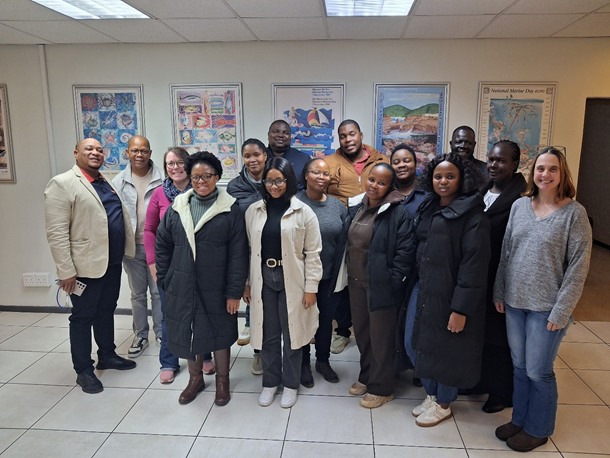
Cape Town, South Africa — South Africa is taking steps to strengthen how fisheries and aquaculture data is collected, managed and reported.
The move follows a two-day training workshop held in Cape Town from 23 to 24 July 2026.
The programme focused on the African Fisheries and Aquaculture Database (AFAData). The platform is designed to make fisheries data across Africa more visible, comparable and useful for decision-making. (Maritimafrica)
The training was organised by AU-IBAR through the European Union-funded Fisheries Governance Project Phase Two (FishGov2).
Sixteen participants attended the workshop. They included 13 technical officers from South Africa’s Department of Forestry, Fisheries and the Environment. Officials from the Southern African Development Community (SADC) Secretariat and AU-IBAR also took part. (Maritimafrica)
AFAData supports better decisions
AFAData is a continental platform for fisheries and aquaculture information.
It allows African Union member states to enter, update and analyse sector data. The platform is linked to the Animal Resources Information System (ARIS).
The database is now operational. It is open to African Union member states.
South Africa is among five countries selected to accelerate its use. The other countries are Madagascar, Senegal, Tunisia and Uganda. (Maritimafrica)
The initiative aims to create a stronger evidence base for fisheries and aquaculture policies.
Training moves beyond basic registration
The Cape Town workshop focused on practical use of the platform.
Participants were first introduced to the database structure and reporting process.
They then worked with actual South African data. This included the country’s 2024 fisheries and aquaculture data.
A national AFAData account was also created. A focal point was appointed to manage the country’s membership and reporting process. (Maritimafrica)
This approach means South Africa has moved beyond simply learning about the system.
It has started using the platform as part of its national reporting process.
South Africa appoints data validators
The training also resulted in a formal reporting structure.
The Acting Deputy Director General designated data validators within three chief directorates.
The Marine Resources Management directorate will validate information on fish trade and vessels.
The Fisheries Research and Development directorate will oversee capture fisheries and fishing effort data.
The Aquaculture and Economic Development directorate will validate aquaculture production and farm information. (Maritimafrica)
The arrangement could improve the quality and reliability of future submissions.
Why reliable fisheries data matters
Reliable data is essential for effective fisheries management.
Governments need accurate information to understand production levels, fishing effort and trade.
The same applies to aquaculture.
Better data can help policymakers identify trends and assess the performance of the sector.
It can also support investment decisions and long-term planning.
For fishing communities and fish farmers, better information can help ensure that policies reflect actual conditions on the ground.
Data supports Africa’s agriculture goals
AFAData also has a continental role.
The platform can support reporting under the Kampala Comprehensive Africa Agriculture Development Programme (CAADP) Declaration and its Biennial Review process.
The process began in 2026.
Consistent reporting is important because sectors that are poorly measured can be overlooked during policy and investment decisions. (Maritimafrica)
The fisheries and aquaculture sector is therefore gaining a stronger place within Africa’s wider agricultural development framework.
SADC strengthens regional cooperation
The involvement of the SADC Secretariat adds a regional dimension to the initiative.
National data systems can vary from one country to another.
Different definitions and reporting methods can make regional comparisons difficult.
A common continental platform could help address some of these challenges.
It may also support more consistent reporting across Southern Africa.
Workshop identifies data challenges
The practical training also exposed several issues that could improve the database.
Participants discussed the use of registration numbers instead of vessel names as unique identifiers.
They also reviewed import templates and species reference lists.
Other discussions focused on definitions within the fisheries sector.
One example involved how to classify fish restocked using hatchery fingerlings.
Another concerned wild-caught fish that are later fattened in cages. (Maritimafrica)
Resolving such issues can help improve consistency across countries.
Next phase will expand the platform
Lessons from the South African training are expected to support the next stage of AFAData’s continental rollout.
AU-IBAR has encouraged African Union member states that have not yet nominated a focal point to do so.
The wider objective is to create a functioning information system that supports fisheries and aquaculture across Africa.
For South Africa, the immediate priority will be to maintain regular reporting and ensure that submitted data remains accurate.
Supporting Africa’s blue economy
The initiative also fits into Africa’s wider blue economy ambitions.
Fisheries and aquaculture provide food, jobs and income across the continent.
They also form an important part of coastal and rural economies.
Effective management requires good information.
A stronger fisheries database can therefore support sustainable resource management while helping governments identify opportunities for investment and growth.
What happens next
South Africa now has trained personnel, an operational national account and designated data validators.
The next challenge is to maintain the reporting system.
Regular updates will be important. So will cooperation between national and regional institutions.
If implemented effectively, AFAData could provide African policymakers with a clearer picture of the continent’s fisheries and aquaculture sector.
That information could support better policies, stronger investment decisions and more sustainable management of aquatic resources.
Related Stories
Notes
- AUN-CEFAAB Advances Africa’s Blue Economy
- South Africa Strengthens Fisheries and Aquaculture Cooperation
- Strengthening Aquaculture Collaboration in Ghana
- Nigeria Pushes Fisheries Research and Innovation
- Africa Calls for Greater Maritime Security Ownership
- AfDB Partners With Shanghai Ocean University