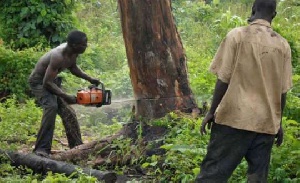
Accra, Ghana — The Government of Ghana has reaffirmed that 12 specific trees and plants are legally protected, making it an offence to cut or fell them without proper authorisation under Ghanaian forestry and environmental law.
Under existing regulations, any person who fells protected species — whether in forest reserves or outside — can be prosecuted and penalised if they do not obtain the necessary permits from the Forestry Commission or relevant authorities. Felling such trees without permission is a criminal offence that carries fines and potential imprisonment.
This development comes amid ongoing efforts to strengthen forest conservation, reduce illegal logging and protect Ghana’s rich but declining forest biodiversity.
What the Law Says
Ghana’s key forestry statutes — including the Trees and Timber Act (NRCD 273) and related legal instruments — prohibit the cutting, felling or export of trees without proper registration, timber rights or permits.
Separately, protective listings under timber resource management rules classify certain tree species as restricted or “protected”, meaning they cannot be felled under any circumstances without a specific permit issued by the Forestry Commission.
Environmental authorities also emphasise that a person who plants a tree does not automatically own the right to fell it — even on private property — if the tree falls under protected categories. Permission must be sought from the Environmental Protection Agency (EPA) or Forestry Commission before pruning or felling.
Common Trees and Plants Covered
While the GhanaWeb report does not list all 12 species in full, forest protection frameworks and species regulations in Ghana identify a range of high-value or threatened species that are subject to legal protection. These include Black Star species — which cannot be felled at all — and other classes requiring special permit approvals.
Some examples of protected Ghanaian tree species (often covered by regulatory listings) are:
• African Mahogany (Khaya species) — prized for durable timber and ecological importance.
• Utile and Sapele (Entandrophragma species) — high-value timber that faces pressure from logging.
• Iroko (Milicia regia) — a large hardwood tree valued for furniture and construction.
• Afrormosia (Pericopsis elata) — listed under international trade controls (CITES Appendix II).
• Other species under restricted timber listings, often requiring permits for any felling or movement.
Note: These examples are illustrative of the broader protected and restricted lists under Ghana’s forestry regulations and international agreements — they may overlap with the 12 species referenced in the recent news announcement.
📌 Why This Matters
- Legal Compliance: Individuals, communities and businesses must obtain permits before felling or transporting trees of protected species — even on private land.
- Forest Conservation: Protecting key tree species helps maintain biodiversity, stabilise ecosystems and support livelihoods that depend on healthy forests.
- Climate and Carbon Security: Standing trees store carbon and help regulate climate impacts — protecting them supports Ghana’s environmental commitments.
Ghana’s Forestry Commission and Environmental Protection Agency are responsible for enforcing laws, issuing permits, and prosecuting offenders where necessary. Environmental authorities continue public education campaigns to ensure citizens understand the rules and avoid illegal cutting.
🔗 External Links
- Official GhanaWeb report: “12 trees and plants protected by law against felling in Ghana” — https://www.ghanaweb.com/GhanaHomePage/NewsArchive/12-trees-and-plants-protected-by-law-against-felling-in-Ghana-2020381
- Ghana Trees and Timber Act (NRCD 273) — detailed forestry law governing felling and permits: https://ghanalegal.com/laws_subdomain/acts/id/401/trees-and-timber-act/
- Timber Legality Risk Assessment (listing restricted/protected timber species) — https://www.timbertradeportal.com/en/ghana/52/other-aspects
- EPA commentary on tree cutting and permits — news coverage on legality of cutting trees even when planted: https://www.businessghana.com/site/news/general/280600/It-is-illegal-to-cut-or-prune-your-own-tree-former-EPA-boss