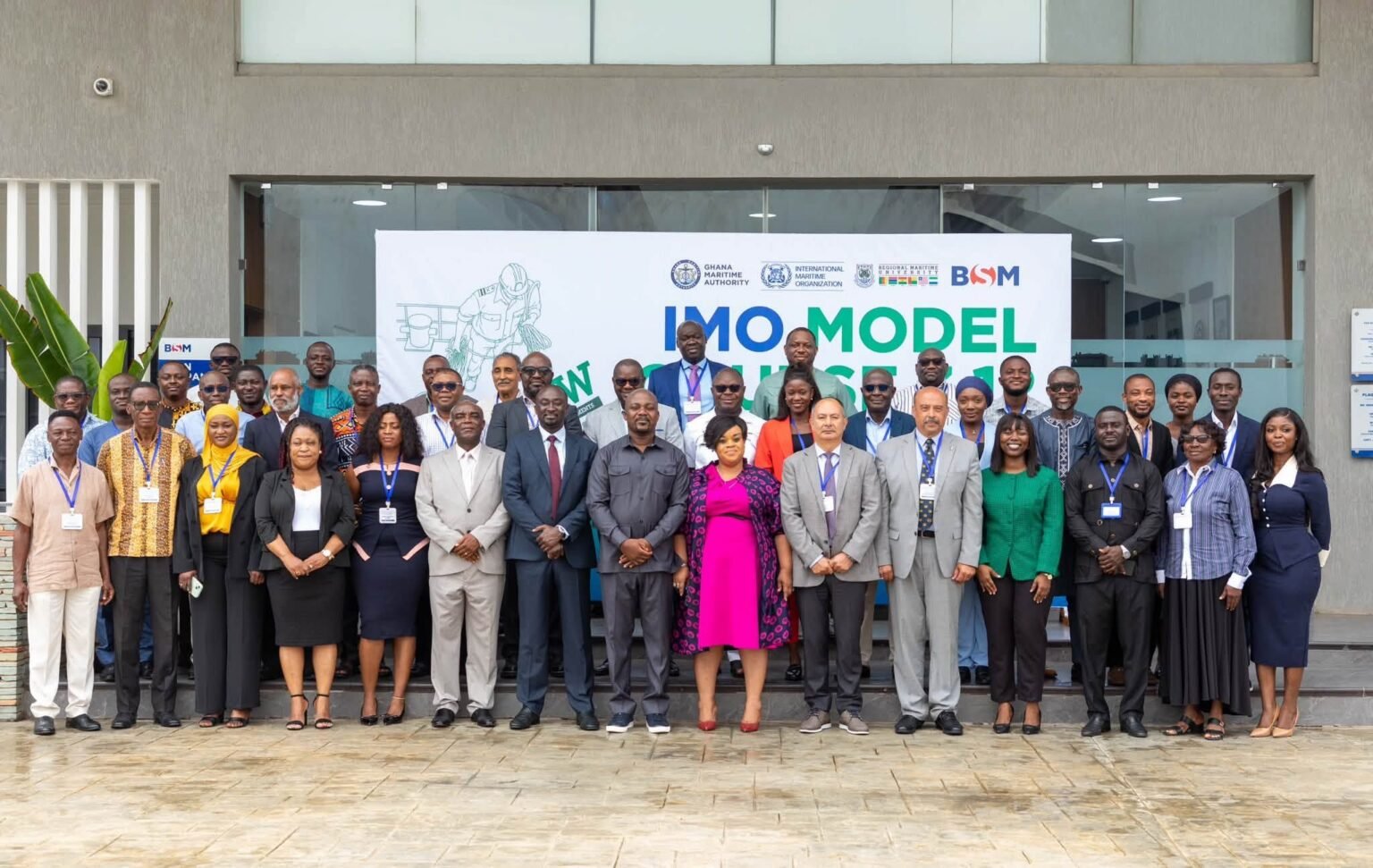
Accra, Ghana — Ghana is strengthening its maritime training and certification system through a regional capacity-building programme designed to improve the skills of seafarer certification examiners and bring assessment practices closer to international standards.
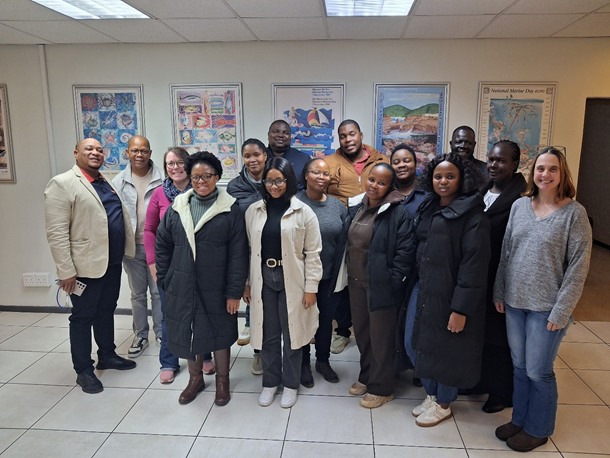
The five-day training workshop, organised by the International Maritime Organization (IMO) in partnership with the Ghana Maritime Authority (GMA), opened in Accra on August 24, 2026. It brings together maritime professionals from Ghana and other West African countries to improve the consistency, fairness and quality of seafarer assessments. (Ghana Maritime Authority)
IMO Model Course 3.12 at the center of the Training
The programme is based on IMO Model Course 3.12 — Assessment, Examination and Certification of Seafarers, a framework designed to equip examiners with practical tools for evaluating seafarer competence.
According to the GMA, the training addresses a significant competency gap within Ghana’s maritime certification system. Of the Authority’s 69 seafarer assessors, only four currently hold the mandatory prerequisite qualification targeted by the programme. (Ghana Maritime Authority)
The training therefore represents an important step toward strengthening the country’s examination and certification processes.
Regional Participation
The workshop has attracted 24 participants from Ghana, Liberia, Cabo Verde, Nigeria, The Gambia and Sierra Leone, with facilitators from the IMO headquarters in London.
The regional approach is significant because seafarers operate within an international industry where qualifications must be recognized and trusted across borders.
Improving assessment standards across West Africa could also contribute to greater consistency in the certification of maritime professionals and strengthen the region’s participation in the global shipping industry.
Strengthening Ghana’s Seafarer Certification System
Speaking at the opening ceremony, GMA Deputy Director General Mubarick Masawudu stressed the importance of maintaining integrity and consistency in the assessment process.
He noted that a Certificate of Competency (CoC) is more than an administrative document because it demonstrates that a seafarer has met internationally recognized professional standards.
The GMA leadership warned that weaknesses in one country’s certification system can affect confidence in the qualifications of seafarers from the wider region. (Ghana Maritime Authority)
For Ghana, the programme is particularly important as the country prepares for its 2027 IMO Member State Audit Scheme (IMSAS) audit.
Preparing for Ghana’s 2027 IMO Audit
The upcoming audit provides an additional reason for Ghana to strengthen its maritime administration and certification systems.
Rather than waiting for external auditors to identify weaknesses, the GMA says it is taking proactive steps to improve examiner qualifications and assessment procedures.
The organization expects the training to help ensure that Ghana’s processes for issuing Certificates of Competency and Certificates of Proficiency can withstand international scrutiny. (Ghana Maritime Authority)
Improving the Quality of Maritime Examinations
The IMO’s Model Course 3.12 focuses on several important aspects of assessment, including the selection of appropriate examination methods and the consistent application of competency standards.
IMO Technical Officer and lead facilitator Milton Baron highlighted the relationship between high-quality training, effective assessment and safety at sea.
The training provides participants with practical approaches to implementing the Standards of Training, Certification and Watchkeeping for Seafarers (STCW) provisions, organising examinations and managing the certification process. (Ghana Maritime Authority)
Why Seafarer Certification Matters
Seafarers operate vessels that transport a substantial share of international trade. Their competence therefore has direct implications for:
- Maritime safety
- Protection of the marine environment
- Efficient vessel operations
- Cargo and passenger safety
- Emergency preparedness
- Global shipping standards
A robust certification system helps ensure that professionals serving aboard ships possess the knowledge and practical competence required for their responsibilities.
The importance of this work is also growing as the maritime sector undergoes major technological and environmental changes, including digitalisation, automation and the transition toward lower-emission shipping.
Building Africa’s Maritime Human Capital
The initiative also supports broader efforts to develop Africa’s maritime workforce.
With the continent seeking to expand its blue economy, strengthen port infrastructure and increase participation in international shipping, the availability of highly trained maritime professionals will become increasingly important.
Training competent assessors is therefore not only about examination procedures. It is also about creating reliable systems for developing the human resources needed to support Africa’s long-term maritime ambitions.
A More Integrated West African Maritime Sector
The participation of six West African countries gives the programme a wider regional significance.
Greater alignment in maritime assessment practices could facilitate professional mobility, strengthen confidence in regional qualifications and support cooperation among maritime administrations.
It could also contribute to a stronger pool of maritime expertise capable of meeting the evolving requirements of the international shipping industry.
Looking Ahead
The GMA’s latest initiative demonstrates Ghana’s effort to strengthen maritime governance before its 2027 IMO audit while improving the credibility of the country’s seafarer certification system.
As global shipping becomes increasingly technology-driven and environmentally focused, maintaining high standards of training, examination and certification will remain essential.
For Ghana and other African maritime nations, investment in qualified assessors and internationally aligned certification frameworks could become an important foundation for building a safer, more competitive and more sustainable maritime sector.
Related Stories
- Original MaritimAfrica report
- Ghana Maritime Authority
- International Maritime Organization
- IMO STCW Convention and Code
- Regional Maritime University, Ghana
Notes
- Ghana and Sierra Leone Lead Maritime Partnership Dialogue With Korea Maritime and Ocean University
- Ghana GAF Launches Gender Training Manual Orientation at Eastern Naval Command
- Ghana Navy Special Boat Squadron Conducts Drone-Supported Exercise
- Strengthening Aquaculture Collaboration in Ghana
- Africa Must Assert Full Ownership of Maritime Security and Blue Economy
- AUN-CEFAAB Advances Practical Solutions for Africa’s Fisheries and Blue Economy